Evaluating Design Leadership Candidates Without a Design Executive on Staff
Build your scorecard before sourcing to evaluate design leadership without in-house expertise.

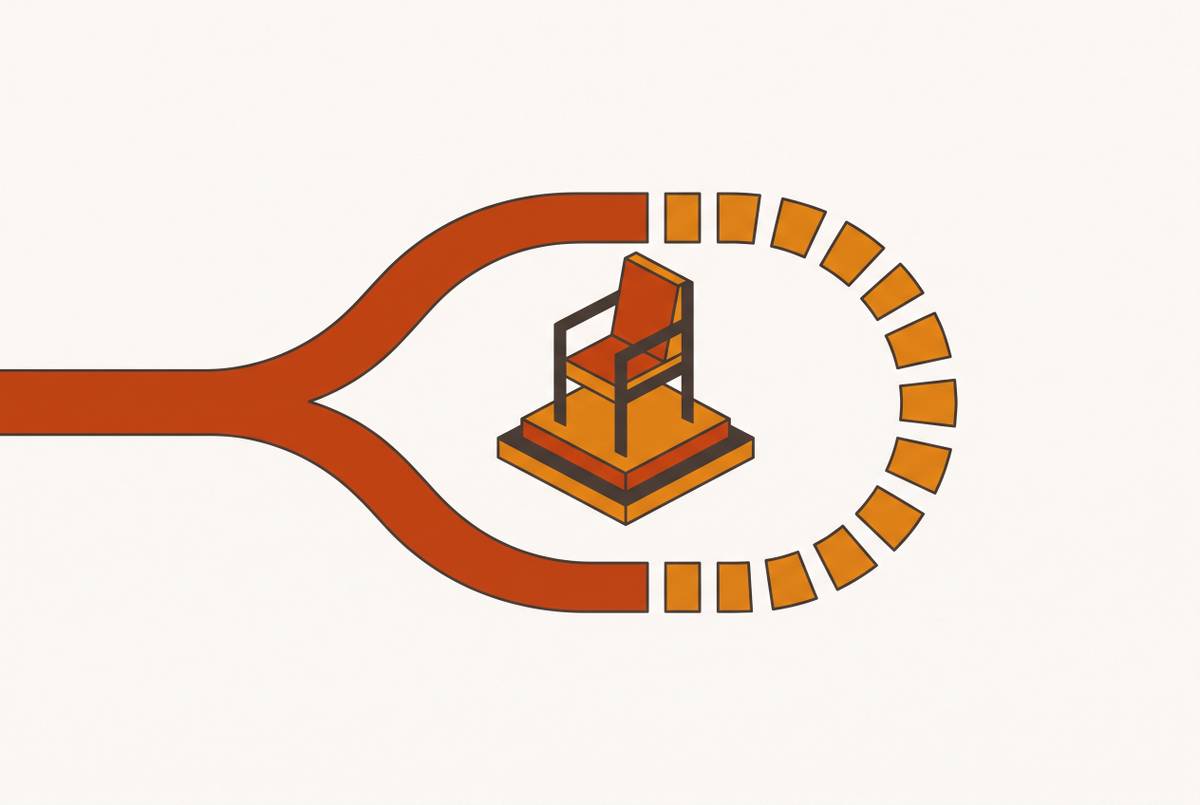
Evaluating a design leadership candidate without a design executive on staff is a solvable problem, not an impossible one. The fix is to build the reference point yourself, before the first interview happens.
Hiring Design Leadership Without a Design Executive on Staff
Without a design executive on staff, nobody in the room has a reference point for what exceptional design leadership looks like at this specific company, at this specific stage. None of these proxies measure fit for the actual role. They measure familiarity with patterns that may have nothing to do with the context a founding team is operating in.
The wrong-stage problem appears when a leader's instincts match the wrong company size. The instincts that made someone successful at a much larger company can actively work against them at a small one. Skills-based, context-aware assessment is what separates a strong hire from an expensive mismatch, and credential-based assessment cannot tell the two apart.
When the mismatch lands, the disappointment is predictable. Every one of these failures was visible before the offer letter went out, if anyone had been looking for it.
None of this is a market-scarcity problem. The talent exists. What's missing is a structured process built before sourcing starts, one that defines what the company actually needs instead of what the company assumes a "design leader" should look like. That's a calibration problem, and calibration problems are fixable.
The three archetypes founders conflate
Most failed design leadership searches start with a job description that quietly conflates three distinct roles. Separating them early is the single highest-leverage move a founding team can make before writing a single interview question.
The first is the Maker: a senior individual contributor who ships work, sets the quality bar, and operates independently without much oversight. For most early-stage teams, this is the right first design hire by a wide margin.
The second is the Manager: someone who builds a design organization, represents design at the executive table, and scales a team over time. This role has real value, but only once there's a team to manage and a design function that has already proven itself. Hire a Manager too early and there's nothing for them to manage.
The third is the Unicorn: a mythical candidate who executes at an elite level, manages a team, sets strategy, runs research, and maybe writes front-end code on the side. This candidate shows up constantly in job postings. They don't show up in the talent market, because they don't really exist as a single person.
The sequencing argument matters more than the labels. Hire the Maker first: senior enough to work without hand-holding, skilled enough to set the standard other hires will be measured against, pragmatic enough to ship good work under imperfect conditions. Getting this sequence right makes every later hire easier, because there's now a working design practice to build an organization around. Getting it wrong, by chasing the Unicorn or hiring a Manager with no one to manage, costs roughly a year of cleanup: a mis-hire to unwind, a search to re-run, and a design function that's a year further behind than it needed to be.
One might argue this is too rigid, that the goal should be someone who can grow with the company over time. Choosing the right archetype for the current stage doesn't block growth. It creates the conditions for growth to happen at all. A Manager with no team can't grow a function that doesn't exist yet. A strong Maker who ships real work and proves design's value to the business is the person an organization naturally grows around.
The design leadership candidate pool in 2026
Once a founding team is screening for the right archetype, the next question is where to find them, and the honest answer is that the strongest candidates often don't come from the pedigree a job description assumes. A survey of 119 design leaders found 93 distinct pathways into the profession. That is close to a different path for nearly every leader surveyed.
Many of these leaders didn't start in design at all. The same research found that fewer than half of design leaders plan to stay on their current career trajectory, which signals a pool that's still actively diversifying rather than settling into a predictable shape.
What does this mean for a founding team running a search? Screening by employer brand or degree program discards most of the qualified field before anyone even gets to an interview. Skills-based hiring is already where the strongest hiring teams in creative roles are heading, and for good reason: a candidate's previous company gives you context about what they were exposed to, but it was never a substitute for judging what they can actually do.
Defining what exceptional means for your team before the first interview
The most reliable defense against falling back on credentials is defining, in writing, what this role needs to deliver and what leadership behaviors predict that outcome. That work has to happen before a single candidate is evaluated, before the first round of interviews when everyone's already anchored on whoever interviewed well.
Start by translating business outcomes into observable leadership dimensions: specific, scoreable competencies that predict success for this archetype, at this stage, in this context.
AI fluency belongs on that list as its own line item, not as something assumed from a candidate's years of experience. A candidate's resume won't tell you this. A direct question will.
Systems thinking versus surface design is another dimension worth scoring separately. A director-level hire needs to think in platforms and primitives, not individual screens. Does the candidate talk about the architecture of a product, or only about the specific features they touched? A candidate who can only operate at the feature level isn't performing at the scope the role requires, no matter how polished their individual screens are.
Ambiguity tolerance matters just as much: can this person operate without a full spec, a defined org chart, or a clear lane? Large-company-only experience deserves a closer look here. The concern is whether the candidate has ever shaped a process from nothing, or only ever followed one someone else built.
Early-stage companies need the former far more often than the latter.
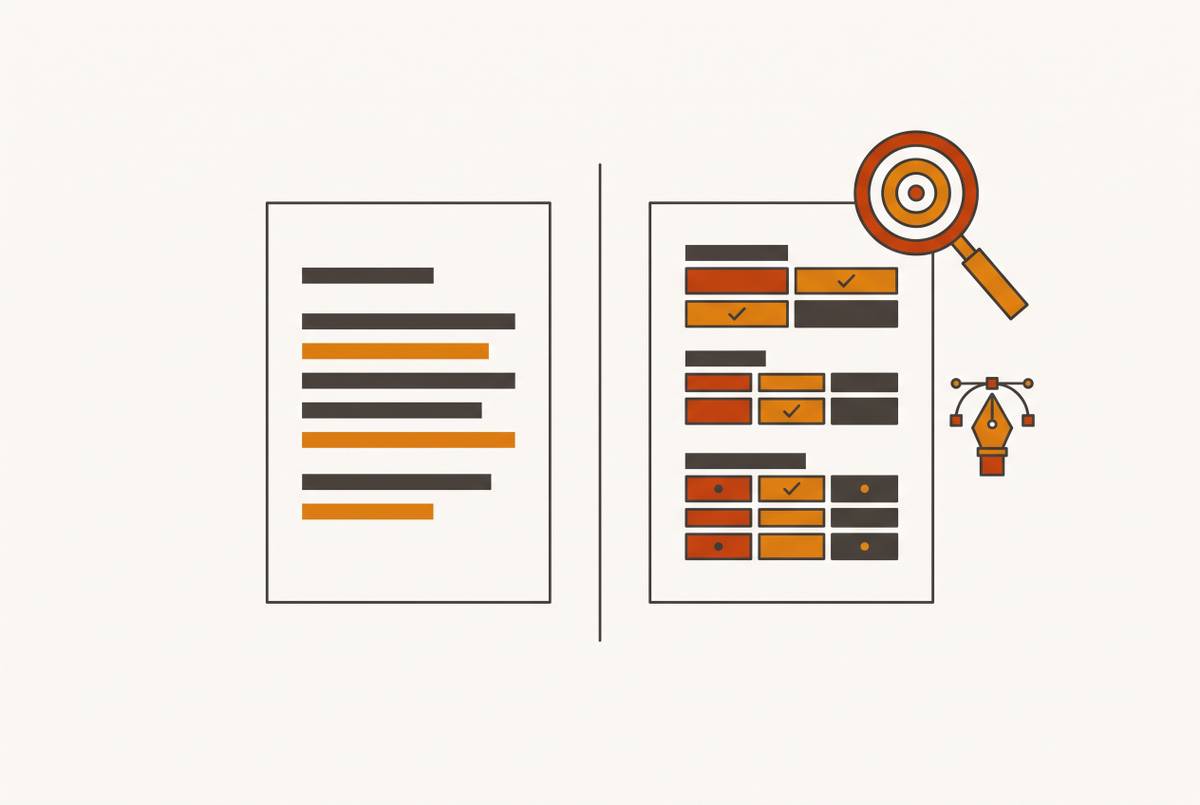
Build the scorecard from these four dimensions before sourcing starts. That way, every interviewer, regardless of their own design background, is evaluating candidates against the same defined behaviors instead of their own private sense of "seemed impressive." An AI hiring tool can help accelerate this step: one that learns what a company actually considers exceptional, then tests that definition against what the real talent market contains, gives a non-expert hiring team something close to the calibration a design executive would otherwise supply by instinct alone.
Reading evidence of design leadership in an interview without design expertise
With the scorecard built, the next job is reading evidence correctly in the room. The case study walkthrough is the single most revealing part of the process, because it shows decision-making under real constraints and how a candidate frames their own contribution against the team's.
What separates a strong signal from a weak one isn't polish. A candidate explaining specifically what they did, the trade-offs they made, how they worked with engineering to actually ship, and what they'd change next time is showing you something real. A candidate who defaults to "we" for every decision, who presents beautifully documented process but under-shows the actual design work, or whose "strategic thinking" turns out, under a few follow-up questions, to have been done mostly by a product manager, is showing you something else entirely.
This is where interviewers without a design background can still ask sharp, useful questions. Don't ask for a theory of design leadership. Ask the candidate to walk through a specific decision: what were the alternatives, and why did they choose what they chose? Live, in-progress work, like a design file that's a few days old or a concept that hasn't been validated yet, often reveals more honest capability than a polished final deck ever will. Nobody over-rehearses a work-in-progress.
Fit with context matters too, not just a match on paper. Has this person ever worked somewhere they had to define the process rather than inherit one? How do they talk about the role of design at a company where design hasn't yet proven its value to the business? What's their honest answer when asked how much of their time they expect to spend actually executing versus directing someone else's execution?
Using a fractional design leader to calibrate before committing to a permanent hire
Some teams reach this point and realize they genuinely can't evaluate candidates yet, because they haven't defined what the role should produce or what strong work should look like at their company. If that's the situation, a fractional or contract-first design leader is a faster, lower-risk way to build that calibration than jumping straight into a permanent search.
Fractional and contract-first models have grown specifically because they let a company access senior design judgment without waiting out a full executive search, and they give the company direct, working experience of what design leadership actually looks like in practice. That experience sharpens whatever permanent search follows.
A fractional leader does two things at once. A fractional leader produces real design work the company needs right now, helps the company figure out what "exceptional" genuinely means for its specific product, team, and culture, and often settles whether the role should be a Maker or a Manager more clearly than months of internal debate ever could.
None of this should become an indefinite delay tactic. The point of a fractional engagement is a faster, higher-confidence permanent hire, not a long-term substitute for one. A well-scoped engagement with a clear end point, defined criteria for the permanent role, is a legitimate step in the process. An open-ended one is just procrastination with a invoice attached.
AI-Assisted Sourcing and Screening
A strong scorecard still has to be executed against, and most lean founding teams don't have a recruiting function to do it. This is where AI-assisted tools genuinely help, within limits worth being precise about.
AI can speed up sourcing, rank candidates against a defined brief, and cut down the manual overhead of running a full-cycle search: surfacing relevant candidates, summarizing portfolio walkthroughs, structuring interview notes, handling scheduling. For a lean team with no dedicated recruiter, agentic systems that manage multi-step sourcing and outreach shrink the time between writing the role and getting qualified candidates in front of the right person, without requiring anyone to build out a recruiting function first.
Evaluation is a different matter. A portfolio can look polished and still reveal almost nothing about a candidate's actual influence on a project. A candidate can lack the "right" title and still have exactly the experience the role needs. Judging ambiguity tolerance or player-coach orientation requires reading context, tone, and specifics in real time, not matching patterns against a resume. This is structural to design leadership hiring: a portfolio can miss the real complexity of the work entirely, and no amount of automation replaces the interpretation that senior creative hiring demands. The strongest processes pair better tools with clearer human judgment, not one in place of the other.
The clean division of labor: tools handle sourcing, rank candidates against the scorecard, and manage scheduling. People handle the case study review, the contextual probing, and the final call. Blur that line in either direction, humans doing manual sourcing work a tool should handle, or a tool making judgment calls that require human taste, and the quality of the whole search degrades.
Keeping the hiring standard visible, revisable, and human-owned as the search progresses
Once the framework exists, the biggest remaining risk is that the definition of "exceptional" quietly shifts over the course of the search, without anyone deciding to change it on purpose. That's the same pattern-matching failure the whole process was built to avoid, just arriving later and harder to spot.
Every interview teaches the hiring team something new about the market and about what the company actually values. What matters is whether that new information sharpens the standard on purpose, rather than dragging the team toward whoever happened to interview most recently. A standard that drifts invisibly is no standard at all: candidates get measured against a moving target, strong but unconventional candidates get filtered out by a pattern nobody named out loud, and the eventual hire reflects recency bias more than considered judgment.
Treat the scorecard as a living document. Every change to it, whether prompted by market feedback, new information from an interview, or shifting business conditions, should happen on purpose, with a stated reason, and with a specific person owning that decision.
The market itself is useful feedback here. If the early-stage talent pool simply can't produce the Unicorn a job description describes, that's information the standard needs to absorb rather than ignore. Perhaps the archetype itself is the wrong one. Maybe the compensation doesn't match the ask. Maybe the timeline needs to stretch.
This is where outside support, a fractional recruiting partner, an AI system tracking interview feedback against the original scorecard, or both together, adds the most lasting value. Not by replacing judgment. By making judgment visible, accountable, and something the team can actually examine and improve. That's what rigorous design leadership hiring looks like without a design executive on staff: not a shortcut around judgment, but a structure that keeps judgment honest.