False Positives in Startup Sales Hiring
Interviews reward the exact skills that fool hiring managers about sales performance.
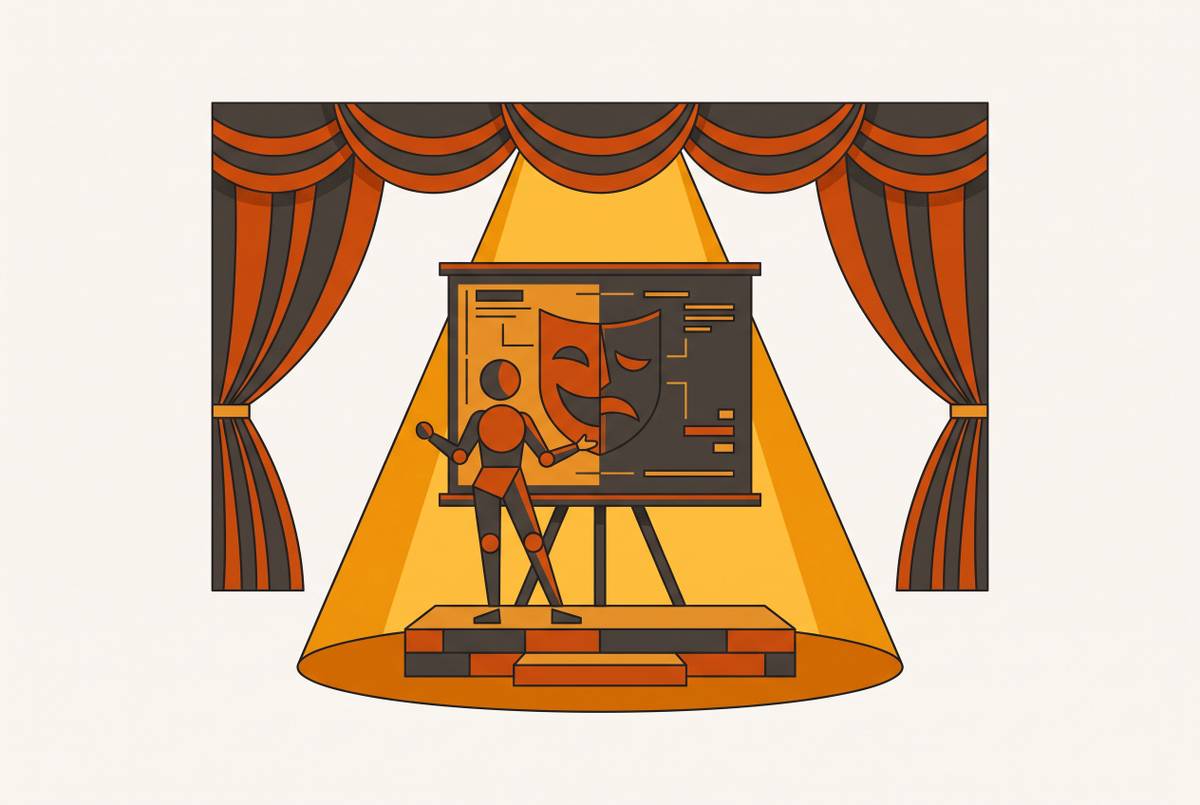
Sales hiring produces more false positives than almost any other function, and the reason is almost too simple: the interview rewards the exact same skills the job requires. Persuasion, presence, a follow-up email sent at the right hour, the ability to read tension in a room and adjust on the fly. A candidate who confirms the meeting time, asks a sharp question about the company's roadmap, and handles a tough objection with grace is showing you a performance tuned to the wrong target. They're doing the job, just aimed at the wrong target.
Salespeople are trained, day after day, to perform well in exactly the kind of high-stakes, persuasion-heavy conversation an interview is. Salespeople walk into an interview room carrying the same honesty as engineers or marketers, just sharper training for the room itself. It's that their profession trains them, day after day, to perform well in exactly this kind of high-stakes, persuasion-heavy conversation. An operations candidate who sends a thoughtful follow-up note stands out. A sales candidate who does the same thing is just clearing the bar for entry. If the hiring team isn't calibrated for that difference, mediocre performance dressed in professional polish reads as exceptional.
The gap doesn't appear in the room. Not in the room. It appears at month four, when the pipeline that looked so promising in the interview stalls out and ramp goes sideways. Or it appears at month eight, when the rep quietly leaves and everyone describes it the same way: great hire on paper, disappointing in reality.
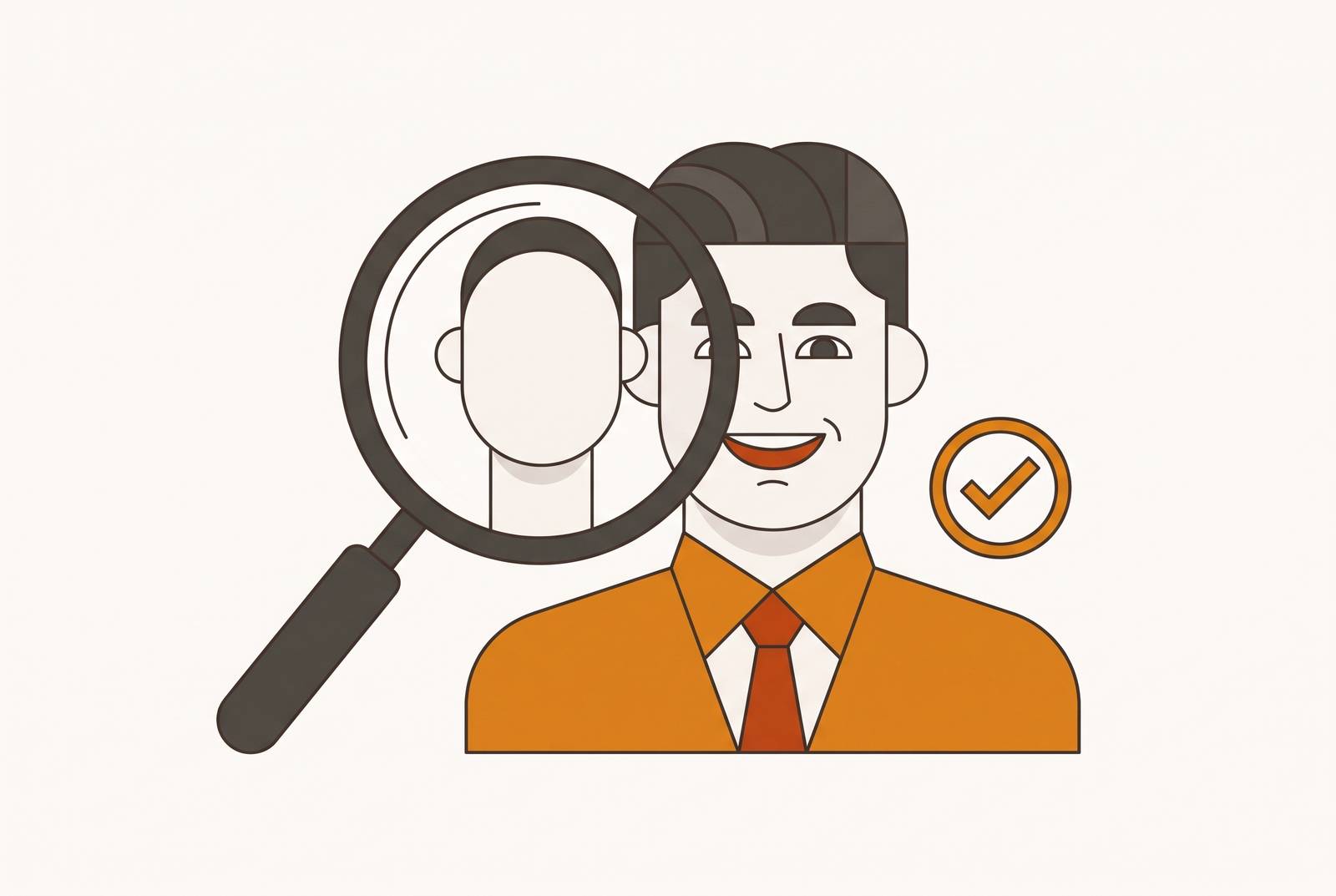
Compare that to a weak engineering hire. A candidate who can't code well enough for the job will, in most cases, struggle to produce a working demo somewhere in the process. The failure occurs early, often live, in front of the people evaluating it. Sales doesn't work that way. A weak salesperson can produce a flawless interview indefinitely, because the interview and the job are different tasks wearing the same clothes. The structural problem this piece will unpack is not who's lying, but why the screening environment itself can't tell the difference between someone who's good at selling and someone who's just good at being interviewed.
The "False Confidence Trap" in leaders
The mechanism that makes this failure mode so durable works as follows. Confidence peaks exactly when leaders are most exposed, during the interview process itself, and then collapses after the hire is made. That lag is the whole problem. By the time performance data rolls in, months have passed, and nobody's left connecting the screening failure back to its actual cause.
Why does this happen? Pipelines look strong. Interviews feel smoother than they used to. Every stage of the process builds confidence, right up until the point where performance should show up and doesn't. The candidate who seemed like the safest bet in the room turns out to be the one who'd simply optimized hardest for that room.
One might argue hiring managers should catch this before it becomes a pattern. But consider the conditions most sales managers are actually operating under when they interview: overloaded, reactive, and thinking mainly about filling an open territory rather than evaluating a person carefully. Interviewing becomes a task to rush through.
And when the hire doesn't work out? Blame lands on HR, or on the candidate, or on "bad luck." The screening system that actually produced the failure never gets examined. So the company changes recruiters, keeps the same process, and gets the same outcome. That loop, failed hire, new recruiter, same process, same result, is a system problem wearing a people costume. It's a system problem wearing a people costume.
This trap has also spread beyond human interviewers. Roughly half of CEOs now say they're worried that AI-screened hires look impressive on paper but fail to ramp once they're in the seat. The False Confidence Trap didn't stay contained to human interviewers. It migrated straight into the automated pipelines that were supposed to fix it.
AI screening looks like the obvious fix. But applied to sales hiring without calibration first, AI doesn't filter out the false positive. It automates it.
AI is neither broken nor the villain, and the honest way to frame this is as a magnifier. It's a magnifier. Feed it a strong, well-calibrated hiring system, and it moves faster with better judgment. Feed it a weak or unclear system, and it gets louder and more confidently wrong. The tool doesn't introduce the distortion. It amplifies whatever distortion was already there.
That raises an important question: what exactly is the AI screening against? Roughly half of all resumes now arrive heavily optimized or outright AI-generated, which means keyword screening, the thing automated tools lean on most, has gotten far less reliable as a way to tell candidates apart. Add to that a candidate-side arms race: applicants are using AI to sharpen resumes, rehearse answers, and draft follow-up messages before the interview even starts. The exact polish that used to fool a human interviewer now arrives pre-engineered to pass an algorithmic filter too.
The consequences aren't hypothetical. Organizations using AI in hiring have confirmed, not merely suspected, that their tools screened out qualified applicants. Part of why: these models train on historical hiring data, and historical hiring data reflects historical bias. The AI doesn't correct that bias. It scales it.
Why does this matter so specifically for sales roles? Because an AI trained on past hiring outcomes will keep rewarding the same credential and presentation signals that created the false positive problem in the first place. Without calibration data built from a company's own actual top performers, the model has no north star of its own. It just repeats the pattern it was handed, faster than a person could.
Why startup sales hiring is especially exposed to false positives
Startups don't just inherit this problem, they concentrate it. No deep calibration data to draw on, thin process discipline, and no runway cushion to absorb a bad hire the way a company with three years of cash reserves can.
The sharpest version of this is stage-mismatch, and it's also the most commonly violated rule in the research. A candidate who thrived at a later revenue stage fails at a dramatically higher rate when dropped into an earlier-stage role, and candidates coming out of large, established SaaS companies almost certainly fail in early-stage seats. A candidate who immediately asks for a large team, an extended ramp period with a guaranteed draw, or serious infrastructure before they'll start selling is telling you that they can't operate without a safety net, and the tell is usually visible before the offer even goes out. That's a late-stage operator interviewing for an early-stage job. The mismatch is diagnosable in advance, if anyone's looking for it.
Timing compounds the exposure. Bringing in a sales hire before the company has validated a repeatable motion means expecting a single person to manufacture product-market fit through force of personality. Even a genuinely excellent salesperson fails under that condition, because the job they were hired to do doesn't exist yet. The practitioner consensus on this is fairly blunt: hire only after the founder has personally closed deals, validated that the motion repeats with at least one or two reps, and the company is actually ready to scale it. Not before.
Early-stage sales work needs adaptability, curiosity, and the willingness to do work outside the job description more than it needs a long resume of enterprise experience.
What a false positive costs a startup that can't afford one
A single bad sales hire can knock an early-stage company off its trajectory, not just its quarterly numbers.
Sales roles already carry close to triple the turnover rate of the average across all industries, which means this isn't an occasional exception a company gets unlucky with. It's a structural, recurring cost baked into the function itself. Every replacement carries a loaded cost, recruiting, onboarding, the lost productivity while a new rep ramps, that runs well into six figures. That's a meaningful fraction of what's left in the bank.
The commonly cited range puts the cost of a single bad sales hire between one and five times that person's annual salary. For a mid-level rep, that's a wide range, and the top of it is genuinely painful for a company that hasn't raised its next round yet.
But the dollar figure understates the real damage. It misses the lost revenue momentum during the months a broken ramp ate up. It misses the confusion a struggling hire creates across the rest of the team, about what the sales process actually is, about what "good" looks like. It misses the founder hours spent managing someone who isn't working out instead of building the product or closing the next round. Boards increasingly tie headcount decisions to milestones, which means a false positive doesn't just cost the company money, it costs the company time against a deadline the board is watching closely.
The frame here is "we lost a salary." It's "we lost a year." A bad sales hire at seed or Series A doesn't just burn cash. It burns the board's confidence that the team knows how to execute its own sales motion, and that confidence is much harder to rebuild than a bank account.
What calibration means in practice for sales hiring
If the reason hiring produces false positives is structural, the fix has to be structural too. That's what calibration means: building a precise, company-specific definition of what a great hire looks like at this exact stage, in this exact motion, against this exact market, before a single resume gets reviewed.
Calibration is meant to replace a specific failure mode. "We're a PLG company, so let's go hire someone out of Figma or Notion" is credential pattern-matching. It's credential pattern-matching, borrowing someone else's definition of "good" and pasting it onto a company at a completely different stage, with a completely different motion, selling to a completely different buyer.
A properly calibrated job spec reads nothing like a typical job posting. It names the actual motion, outbound, inbound, product-led, enterprise, and it names the deal size, the cycle length, the buyer persona, and what success looks like specifically in the first few months. Not "five-plus years of SaaS experience." Every line in that spec should trace back to something the company actually needs.
Calibration also demands honesty about where the company actually sits right now. The skills a rep needs to sell in the early revenue phase, when there's no playbook and no support system, are materially different from what's needed once the motion has scaled and the infrastructure exists to back a rep up. This conversation, founders and hiring managers sitting down and agreeing on what "exceptional" actually means here, has to happen before the job description gets written. Do it after, and the job description becomes the calibration instead of the other way around, which just reproduces the same false positive with extra steps.
How to evaluate sales candidates for what they've built, not how they present
Calibration sets the standard. Evaluation is where that standard actually gets applied, and this is where most hiring processes quietly fall apart, because they keep asking "did this person interview well" instead of "does this person have real evidence of doing this specific work at this specific stage."
That shift changes what questions actually matter. Instead of general behavioral prompts, ask for a pipeline someone built from nothing, a deal they lost and what they took from it, a stretch where they had to sell without any support infrastructure behind them. Those questions expose stage-mismatch almost immediately: a late-stage candidate's answers will reveal, often without them realizing it, exactly how much safety net they were leaning on the whole time.
Why does structured human questioning still matter when AI tools promise consistency? AI interview tools add consistency but consistently miss the qualities that actually predict success in sales, grit and something closer to strategic empathy, reading what a prospect actually needs versus what they say they need. Those traits don't reduce cleanly to a structured rubric. A trained human, asking pointed questions about specific past scenarios, remains the highest-signal method available for catching them.
Work samples earn a place here too, briefly. A short outbound sequence, a discovery call run against a realistic prospect profile, a walkthrough of how someone managed a past territory. None of these need to be elaborate. They just need to show how a candidate actually thinks under conditions that resemble the job, rather than conditions built for a polished performance.
The obvious objection: this adds friction, and it slows the process down. Fair. But weigh that against the cost outlined earlier, a false positive costs far more in time and money than a rigorous evaluation ever will, and a candidate who's genuinely strong isn't going to walk away from a process that takes their evaluation seriously. Titles and brand-name former employers aren't evidence of fit. What someone actually built, the accounts they opened from cold, the motion they ran, the market they fought through, is the evidence that matters.
Where to find strong sales candidates who don't surface through standard channels
None of this matters if the candidate pool feeding into it is already skewed toward people optimized for visibility rather than fit. Fixing evaluation without fixing sourcing just means running a better process on a worse set of inputs.
Consider how much of the market never touches a job board at all. Roughly seventy percent of the workforce counts as hidden talent, qualified people who aren't actively applying anywhere. Outbound-sourced candidates are roughly five times more likely to actually get hired than someone who applied inbound. That's a real edge. That's a different candidate pool entirely.
For sales specifically, a handful of communities carry outsized signal: Bravado, a large gathering point for sales professionals, Pavilion, built around GTM leadership, and Sales Hacker's community, which runs more like a Reddit-style discussion board than a typical networking group. These are places where people talk shop, not places built for job-hunting, which is exactly why they reveal candidates who aren't spending their evenings polishing applications for job boards.
One channel gets overlooked constantly: a company's own CRM or applicant tracking history. Former employees who left on good terms are frequently the fastest, safest hires available, because the calibration work and the track record are both already sitting right there.
The inbound channel, meanwhile, keeps getting noisier. A striking share of all US job listings on LinkedIn in 2025, 27.4 percent, are likely ghost jobs, postings with no real hiring intent behind them. Candidates have caught on, and rightly so, which means the inbound pool skews toward volume-blasted applications rather than genuine fit on either side of the transaction. And once a strong candidate is actually engaged, small signals matter: hiding the compensation range until the final round reads, to an experienced candidate, as a company that isn't being straight with them from the start. Sourcing well and being transparent early are the same discipline, applied at different moments. They're the same discipline, applied at the moment it counts most.