Translating Interview Feedback Into a Repeatable Standard
Miscalibrated hiring standards quietly drive turnover and bad-fit employees through your door.
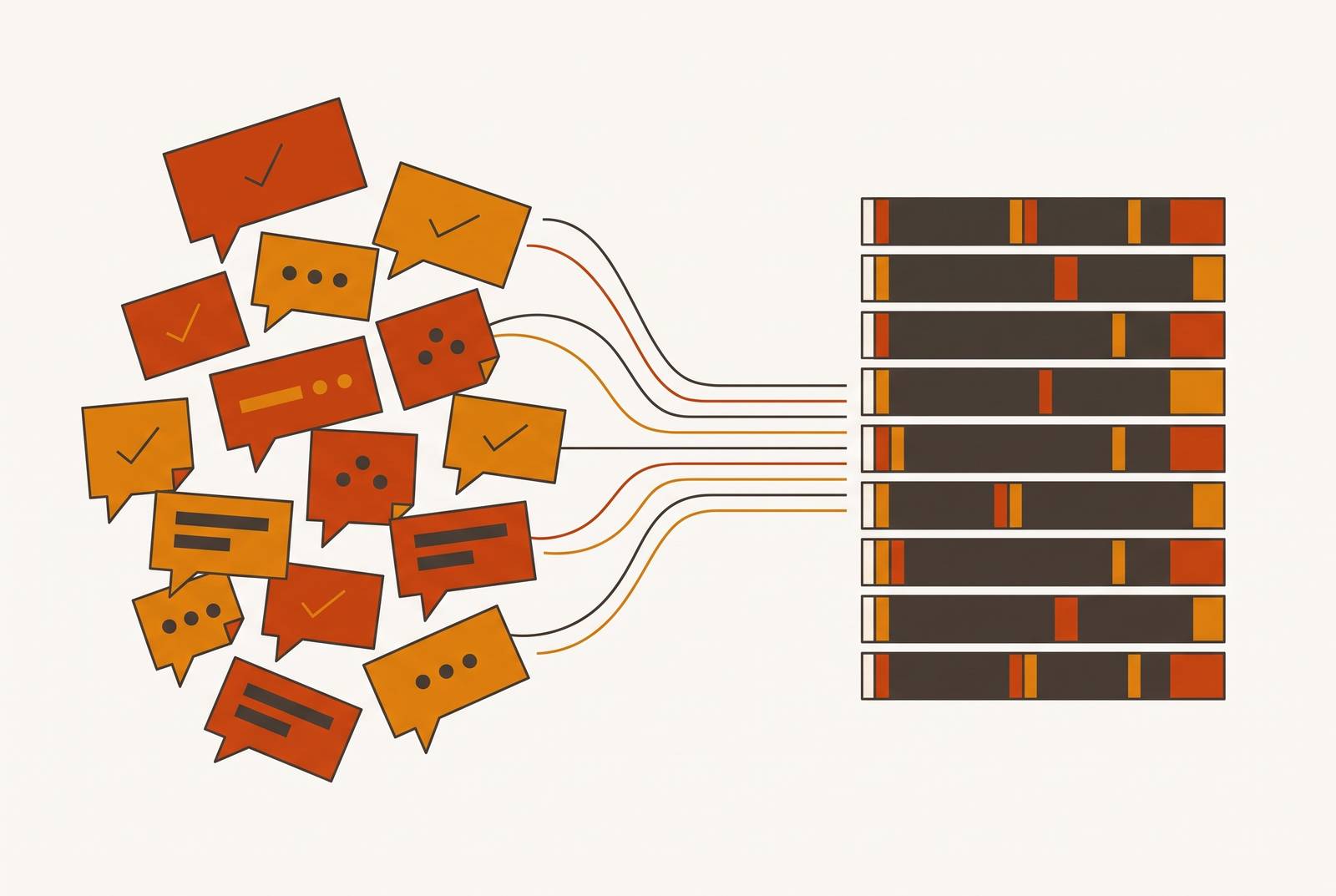
Interview feedback dies the same way at most companies: an interviewer submits a score, someone makes a hire or no-hire call, and the scorecard gets filed away, never opened again. Feedback only becomes a real, repeatable standard when three things happen: it gets captured the same way every time, checked against other interviewers' scores, and used to actually rewrite the criteria it came from. Each hiring decision should work as a calibration event, not a one-off judgment call, and most teams never treat it that way.
The default pattern treats every hire as its own island. Scores go in, a decision comes out, and nobody circles back to ask whether the rubric itself was any good. The standard ends up living in individual interviewers' heads instead of a document the whole team can revise. That's not just wasted meeting time. Research consistently puts the cost of a bad hire at a significant share of that employee's first-year salary, a figure that reflects how expensive it gets when the bar is wrong, or applied differently by every person on the panel. Paychex's 2026 Business Leaders report adds another layer: per-employee turnover costs now run $10,200 to $23,012, and voluntary separations climbed from 42% to 51% year over year. Miscalibration isn't a philosophical problem. Miscalibration raises turnover costs and separations, and this appears in a P&L fast.
What calibration means, and what it is not
Calibration means getting interviewers to agree on what each score actually represents, and what "meets the bar" looks like in practice, so two different people looking at the same candidate land on the same read.
Most teams calibrate wrong, or don't calibrate at all under that name. A debrief where the room argues until everyone converges on one number isn't calibration, it's peer pressure with a deadline. A one-time onboarding session where someone hands a new interviewer the rubric and says good luck isn't calibration either. And calibration is not just another word for structured interviewing. A company can have a beautiful, detailed scorecard, the exact same set of questions for every candidate, and still watch two interviewers land two full points apart on the same performance. That happens because the rubric's words mean something different inside each interviewer's head. One person's "strong" is another person's "average," and no amount of shared question wording fixes that on its own.
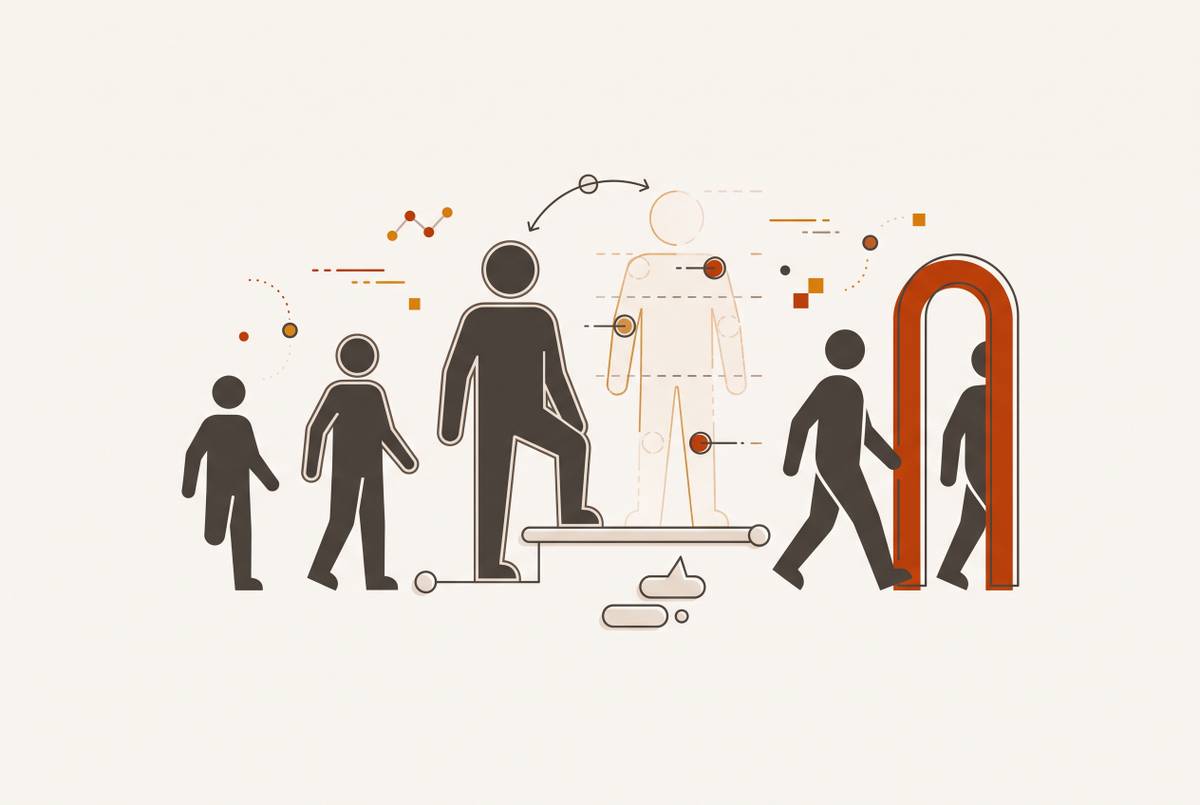
Calibration has to run in both directions, and most teams get this backwards. They treat the rubric as fixed and interviewers as the thing that needs correcting. But if a score level keeps getting interpreted differently by different people on the same panel, it is not an interviewer problem. That's a gap in the rubric, and it needs fixing at the source, not a reminder email telling everyone to "read the rubric more carefully."
The goal is a specific, living definition of what "exceptional" means for this company, this team, this role, one that gets sharper with every calibration session instead of freezing the day it was written.
How bar drift happens
Bar drift is quiet. Hiring managers under pressure to fill a seat start unconsciously lowering the bar without ever deciding to. Interviewers who haven't talked to a genuinely exceptional candidate in months reset their internal reference point to whoever's been coming through lately, and that becomes the new normal without anyone noticing the shift.
A recurring pattern among in-house talent acquisition teams is that the most common failure isn't a missing process. It's a process that worked once and then got left alone. Teams built a strong debrief framework at 30 employees and never touched it again as the company scaled to 200. The rubric that made sense for a scrappy early-stage hire stops making sense once the role, the team, and the stakes have all changed underneath it.
Three mechanisms drive most of this drift, and they rarely appear alone. Scorecards drift toward optimism when fill-rate pressure builds, since nobody wants to be the reason a critical seat stays open another month. A new tech stack, a wider scope, or a different manager to report to changes the job itself, and that change is what makes the rubric go stale. And new interviewers get added to panels without ever sitting through a calibration session, so they inherit the document but not the judgment that produced it.
None of this is easy to catch in the moment. No single interview looks wrong on its own. It's the slow accumulation across dozens of decisions that reveals the standard has moved, and by the time first-year attrition climbs above 15%, reflecting a mismatch between what got screened for and what the job actually demands, several bad-fit hires have already made it through the door. Waiting for that lagging signal is expensive. Treating each hiring decision as its own small calibration check catches drift while it's still small, which is the only point at which it's cheap to fix.
What useful interview feedback looks like and how to capture it
There's a real difference between feedback that quotes the candidate and feedback that just labels an impression, and almost every calibration failure traces back to teams not knowing which one they're collecting.
Evidence-anchored feedback sounds like: "Scoped the project at three weeks, but the manager wanted two, and walked through how they'd negotiate that." That's a specific trade-off the candidate actually named in the room. A label sounds like: "Good problem-solving skills." That's an impression, and it can't be checked against anything. Six months later, nobody, including the interviewer who wrote it, will remember what it was based on.
Only the evidence-anchored version is reusable. It can sit next to another interviewer's notes on the same candidate and actually be compared, and it can get pulled into a future calibration session as an anchor example for what a "4" on problem-solving actually looks like.
Getting that kind of feedback consistently takes structure around how it's captured. Notes need to get written during the interview or right after, before the debrief starts and memory blurs. Scorecard fields need to require a quote or a specific example in addition to a number on a scale. And every interviewer needs to submit a timestamped score independently, before any group discussion, so the loudest or most senior voice in the room doesn't quietly anchor everyone else.
Skipping that independence rule lets the first "strong hire" opinion pull the rest of the panel toward agreement regardless of what their own notes say. If one interviewer says "strong hire" first, the next three people in the room tend to drift toward agreement even when their own notes do not support it. Locking in scores before debrief keeps each read honest.
AI interview tools that transcribe and summarize calls can help here, surfacing direct quotes from the transcript as a starting point for an interviewer's own writeup. That's useful as a prompt. It's not a substitute for a human deciding what the quote actually means. At scale, the systems that work best store each interviewer's evidence right next to their score, make it searchable, and tie it back to the specific rubric dimension it's evaluating.
Running a calibration session: the mechanics of reconciling scores across interviewers
A calibration session has a shape to it, and skipping steps undercuts the whole exercise.
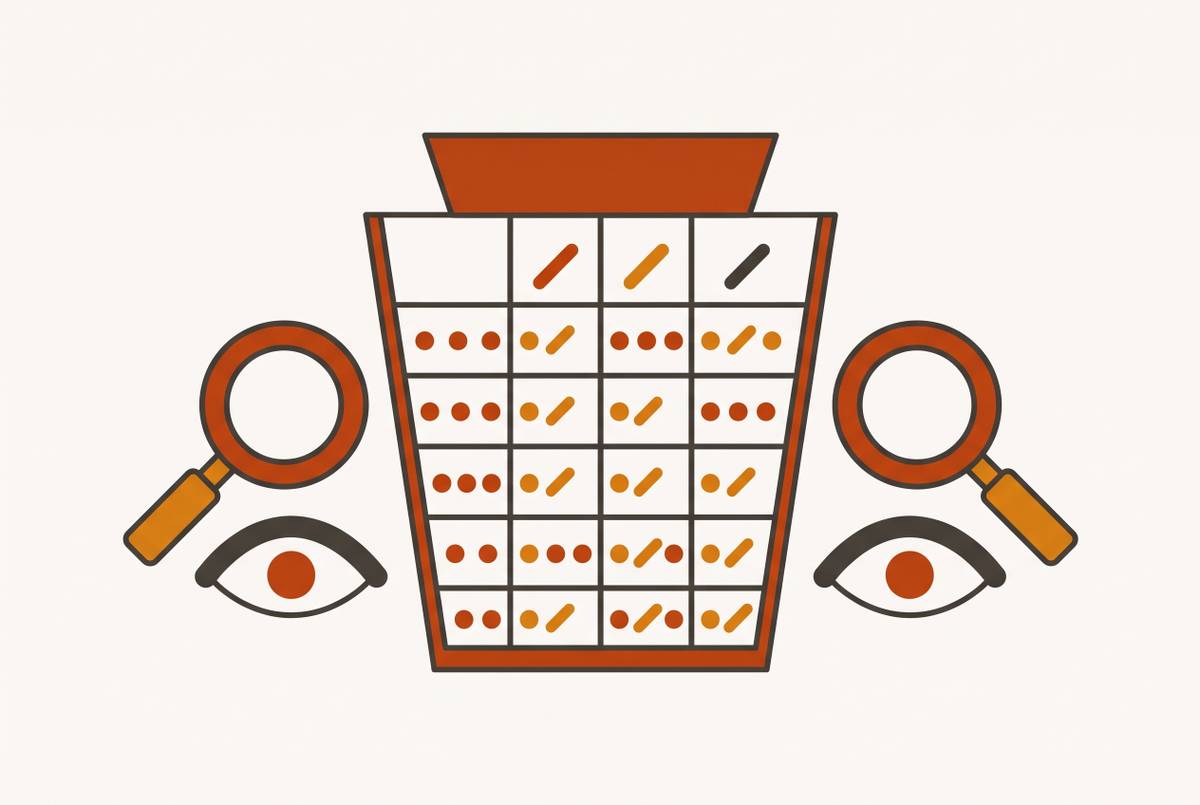
Start with the panel walking through the rubric together, out loud, before anyone scores anything. That builds shared language before an actual candidate's stakes are on the table. From there, each interviewer independently scores one or two anonymized past candidates on their own, without seeing anyone else's numbers. Then the scores get revealed side by side, all at once, not read out one at a time around the table. Sequential reveals just recreate the anchoring effect the independent scoring was supposed to prevent.
The outliers are where the real work happens. When two interviewers land significantly apart on the same competency for the same candidate, that gap is the discussion. Not to force a consensus number on someone who was already hired or passed on months ago, but to figure out where the rubric itself is vague enough to produce two honest, reasonable readings.
Budget meaningful time for a first calibration session on a new role. Later re-calibrations, once the panel already shares language, tend to run considerably shorter. This isn't a one-time box to check either: schedule it when the role opens, again after the first few hires close, and again whenever the role profile changes in a real way, new stack, new scope, new reporting line.
The room needs the full interview panel, the hiring manager, and ideally someone from HR or a recruiting partner who can run the conversation without a personal stake in any individual score. For interviewers who consistently land as outliers, the fix is a targeted one-on-one conversation held privately with that person. Calling someone out in front of peers just teaches people to score less honestly next time. Platforms that track score distributions over time (average scores by competency, hire rate tied to a given interviewer's scorecards, agreement with peers) can flag this kind of drift before it turns into a bad hire.
Letting feedback revise the criteria: how each hiring decision updates the standard
The loop only closes when the rubric itself is allowed to change based on what actually happened. After every hiring decision, offer extended or candidate declined, the panel should ask whether the rubric dimensions predicted the right outcome, and whether any dimension failed to differentiate candidates.
A few signals should trigger a rewrite. Every candidate scoring the same on a given dimension means that dimension isn't measuring anything useful anymore, and it needs rewording or replacing. Interviewers disagreeing on the same dimension across multiple sessions points to ambiguity in the rubric, not noise in the panel, and it needs sharper anchor examples. And a hire who scored high on a dimension but underperforms on the job in exactly that area is a sign the dimension is measuring the wrong thing, dressed up convincingly as the right one.
Every change to the standard should be visible, explicit, and approved by a person, never a quiet drift nobody signed off on. Document what changed, why it changed, and who approved it. Calibration happens before and during the active search; the post-hire review closes the loop by connecting what the interview evidence actually predicted to what happened on the job.
The interview-to-offer ratio is a useful gut check on rubric quality. A commonly cited healthy benchmark is 3:1. Anything climbing north of 4:1 suggests too many borderline candidates are making it to final rounds, which usually means the rubric is too blunt to screen people out earlier.
Over successive calibration events, the rubric grows into a record of the company's evolving definition of exceptional, rather than a static document nobody revisits. Smaller teams without a dedicated analytics platform can get most of this benefit from something as simple as a shared changelog: date, dimension changed, reason for the change. That's not a downgrade from a dashboard. It gets most of the way there.
Where AI and humans each belong in the feedback loop
AI has a real role in this loop, and it's narrower than the marketing usually suggests. It can surface quote-level evidence from interview transcripts to prompt richer notes from interviewers who'd otherwise write "good communicator" and move on. It can track score distributions per interviewer and flag outliers before they compound into full-blown drift. It can look across dozens of hires and find which rubric dimensions actually correlate with first-year retention, and which correlate with early attrition instead. And it can flag when a rubric hasn't been touched since the role it screens for materially changed.
That value depends on clean inputs, and the inputs are getting messier. Robert Half's research found hiring managers reporting real trouble evaluating candidates because of AI-generated resumes flooding the pipeline. The rubric has to work harder now to anchor evaluation on evidence of actual work, actual decisions, actual trade-offs navigated, rather than on a polished credential that may or may not reflect the person behind it.
A unified AI hiring system can, in principle, learn a company's definition of exceptional from feedback over time, sharpening what it surfaces and what it screens out as more data comes in. But every update to that standard needs human review and explicit approval; a silent adjustment buried inside a model retraining cycle is not acceptable. That's the line that shouldn't move, no matter how good the automation gets.
AI tools tuned to match historical hiring patterns will systematically miss strong candidates whose background doesn't look like the last cohort of hires. A feedback loop has to actively track whether the non-obvious candidates who got advanced anyway ended up performing differently than the pattern-matched ones, and feed that evidence back into how the rubric gets designed; teams routinely skip this step. Otherwise the system just gets faster at hiring the same profile, over and over, and calls the speed a win.
Korn Ferry's use of AI, as reported by recruiterflow.com, points to a 50% increase in sourcing volume and a 66% drop in time-to-interview as realistic outcomes. Those numbers only mean something good if the rubric feeding the AI's screening logic was calibrated first. Speed without calibration just means more borderline candidates reach the panel faster, which is the opposite of what the tool was supposed to deliver. Judgment and relationship stay fixed with humans: setting the standard, approving what changes about it, making the final call. AI runs the loop and surfaces the evidence. It should never be the one deciding, quietly, what the standard means.
Building the feedback loop into the recruiting workflow so it runs
None of this works as an extra step bolted onto the process after the fact. It has to run at three specific points in the workflow, not float as an optional add-on for teams with spare time.
Before the search opens, run the calibration session that sets the rubric and locks in anchor examples everyone can point to later. During the search, require independent score submission before any debrief, and require evidence (an actual quote or example) in every feedback field, not just a number. After each decision, run a short post-hire or post-decline review that checks the rubric's predictions against what actually happened, and triggers a revision if something didn't hold up.
The most common failure is almost embarrassingly simple: teams run one great calibration session at the start of a search and never run another one. Build the 30-minute re-calibration into the hiring plan for the role itself, not as a meeting someone has to remember to schedule separately, because that meeting never gets scheduled once things get busy.
Lean, founder-led teams can run this loop without a dedicated recruiter. What it actually takes is discipline: independent scoring, written evidence instead of impressions, a rubric changelog someone keeps current. Tools can automate the reminders and pull the aggregation together, but the discipline has to come from the team, not the software.
Good tooling, when it exists, does one specific job well: a single system that captures feedback, shows score distributions across the panel, keeps versions of the rubric over time, and surfaces the evidence right alongside the hire or no-hire record. That way the loop doesn't depend on any one person remembering to run it manually; manual steps get skipped the moment a hiring push gets busy.
A team that's gotten good at this stops describing exceptional candidates by title and employer, and starts describing them by what they actually built, decided, or navigated under pressure. That shift means the rubric has learned to say, in specific and checkable language, what the company's real standard is.
A feedback loop that's allowed to revise its own criteria is the mechanism by which a company's hiring taste stops living in one person's head and becomes something the whole organization owns, something that survives the day any single interviewer or hiring manager moves on.
Sources
- The Future of AI in Recruiting (2026 Edition)
- AI in Recruiting: Why Hiring is Harder in 2026
- AI in Recruiting: Strategic Guide for 2026
- Interview Debrief and Calibration: Align Your Hiring Panel (2026) - Pin
- Build Consistent Hiring Decisions with Job Interview Rating Scales
- Copy Ready Interview Feedback Examples for Hiring Teams, Scorecard Aligned
- Interview calibration: Hiring glossary
- worksignal.com